
Blown In Insulation in Bellflower, CA: Retrofit Done Right for Older Homes
Blown in insulation typically costs between $1,500 and $4,200 in Bellflower, depending on attic square footage, the condition of any existing material, and whether knob-and-tube wiring needs to be addressed first. Most crews finish in a single day. If you own one of Bellflower’s thousands of post-WWII wood-frame homes, the odds are good your attic is badly under-insulated right now. Call (562) 317-6204 for a written quote before any work begins.
Fast, Reliable Blown In Insulation Across Bellflower
We work in Bellflower almost every week, and we know the houses here. The 1940s to 1960s single-family stock, the long flat lots along streets like Flower Street and Clark Avenue, the way the summer heat sits in the attic until well after sunset. This isn’t a market where you can treat every attic the same. Some still have original rock wool or wood shavings that have settled to R-2 or less. Some hide knob-and-tube wiring under that old material. Our crews arrive in uniform, background-checked, and we hand you a written price before a single tool comes off the truck. Call (562) 317-6204 and a live person answers. That’s how it works.
Why Alden Insulation Long Beach Is Bellflower’s Preferred Blown In Insulation Company
Alden Attic Insulation operates under The Garrison Standard, the same written-discipline system that’s governed every Garrison Partners job since 2002. That means a written price, a written 365-Day Done Right Promise, and a crew that shows up inside the window it promised. Bryce Holloway runs our operation, and he holds every Bellflower job to that standard.
Bellflower homeowners call us because the city’s housing stock has specific, predictable problems. Settled insulation. No air sealing around top plates. Old wiring buried under a layer of material nobody’s touched in sixty years. We address all of it, and every job ends with a written guarantee. If the work fails within 365 days, we return at no charge. That’s The Garrison Code, and it applies to every attic we touch in Bellflower.
Blown In Fiberglass Insulation in Bellflower
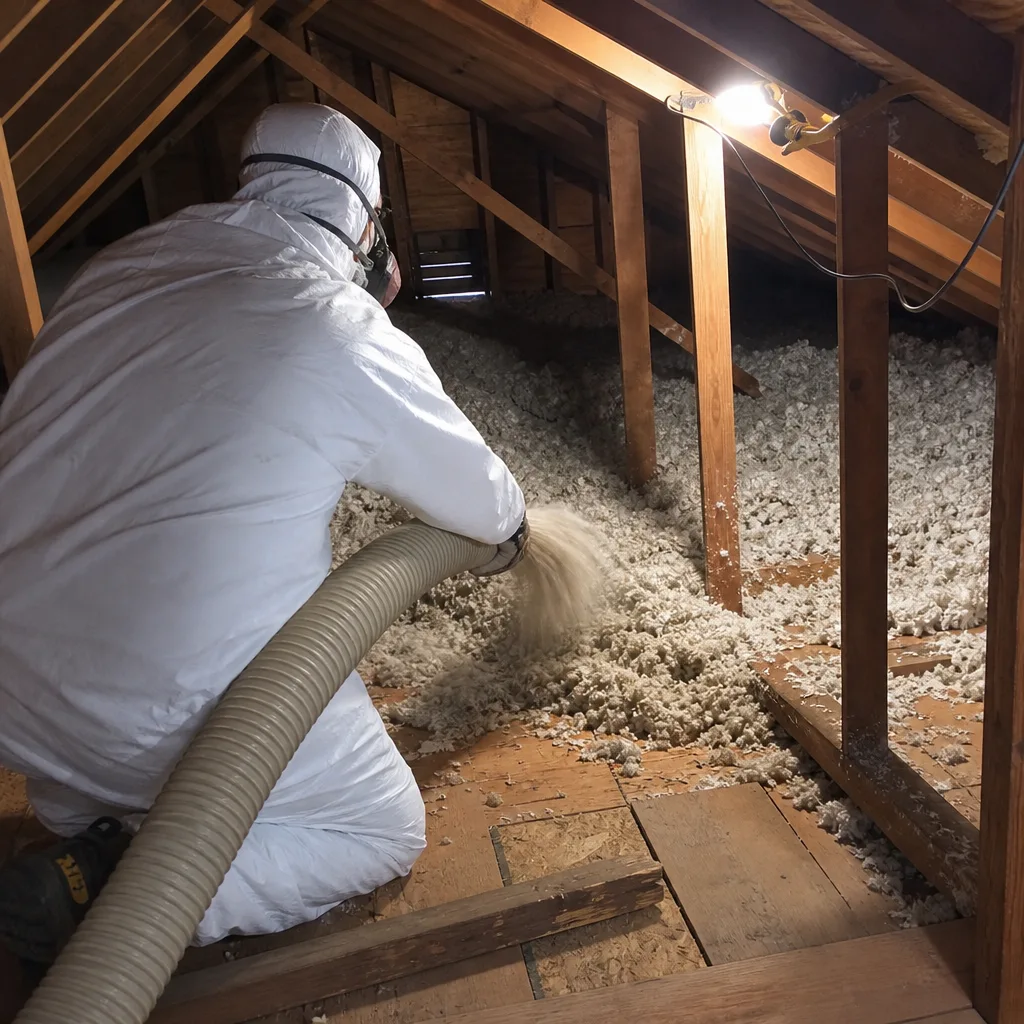
Blown In Fiberglass Insulation is the workhorse retrofit for Bellflower’s older attics, and it’s usually the right call when the existing material has settled, thinned out, or failed entirely. The process involves blowing loose fiberglass particles across the attic floor to a uniform depth that hits your target R-value, typically R-38 for our climate. A standard Bellflower single-family home of 1,200 to 1,600 square feet usually costs between $1,800 and $3,400. The material performs well in dry heat, but it’s dustier and far less forgiving if moisture or framing bypasses are present. We air-seal first, then blow. Skipping the sealing step defeats half the job.
Tight Spaces and Shallow Attic Ceilings
Many Bellflower homes from the 1940s and 1950s have low-slope roofs and shallow attic clearances. Blown fiberglass handles these tight spaces better than batting, because it flows around framing, ductwork, and odd angles without leaving gaps.
Retrofit Over Existing Insulation
When the old material is clean and dry, blowing new fiberglass directly on top is efficient and cost-effective. We check for settled spots first, particularly around the perimeter where heat transfer is worst, then bring the entire attic to a consistent R-38 using Johns Manville Climate Pro loose fill or Owens Corning AttiCat fiberglass.
Loose Fill Insulation in Bellflower
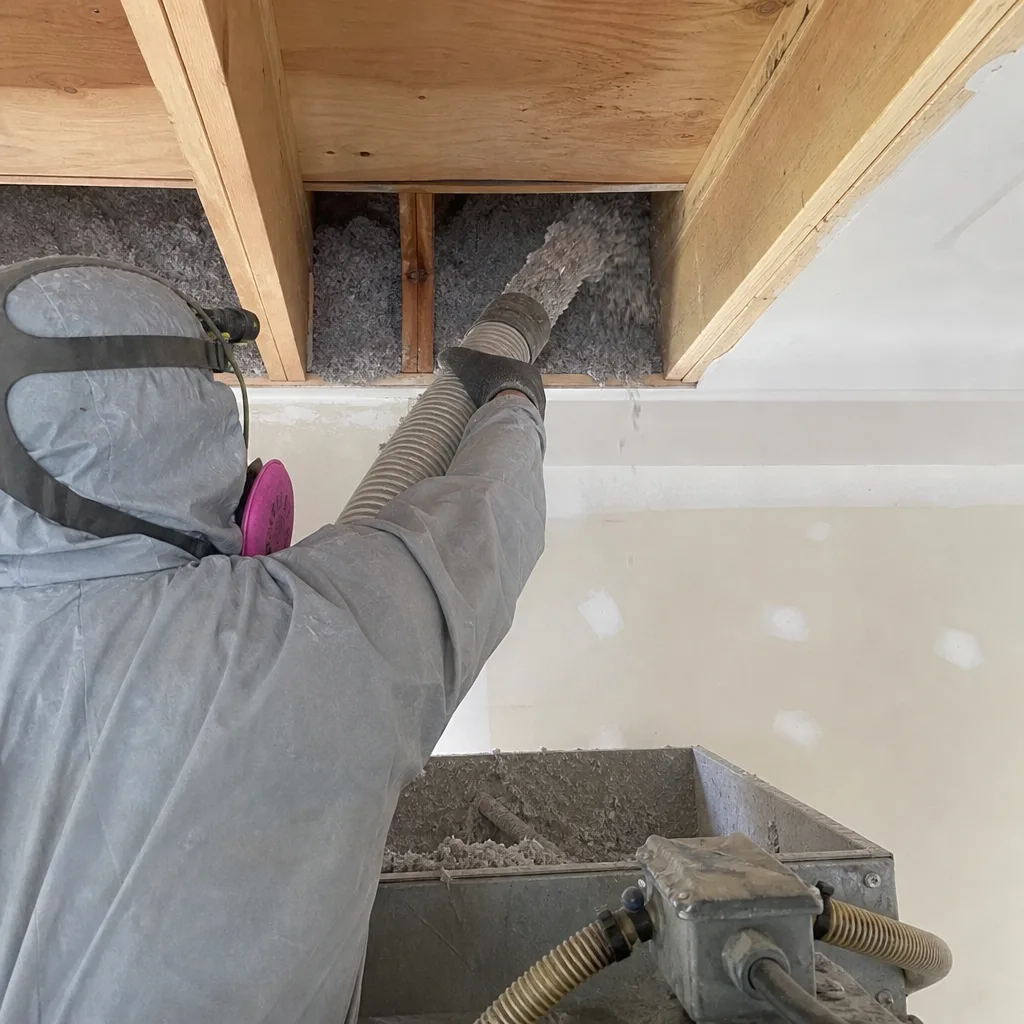
Loose Fill Insulation refers to any insulation material blown or poured into a space rather than installed in batts. In Bellflower attics, this typically means either fiberglass or cellulose. Loose fill costs roughly $1.20 to $2.80 per square foot installed, so a 1,000-square-foot attic runs between $1,500 and $2,800. The best choice depends on the condition of the attic and whether you have old wiring to address. Loose fill fills irregular cavities better than any batt product, which matters in older framing where stud and joist spacing is rarely square.
Air Sealing Before Loose Fill
Blowing material into an unsealed attic is like pouring water into a cracked glass. Top plates, can lights, plumbing chases, and old vent penetrations all leak conditioned air. We seal those bypasses before we blow, then bring the loose fill to depth. Without sealing, Bellflower homeowners lose a meaningful chunk of every dollar they spend on insulation.
Cellulose for Dense Coverage
In some Bellflower attics, particularly those with original wood shavings still present, cellulose from GreenFiber can be the better choice. It settles less than fiberglass and provides slightly better resistance to air movement. We walk through the options at the written estimate and let you pick based on the specifics of your house, not a generic upsell.
Trusted Brands We Service in Bellflower
We install and remove insulation using products from Owens Corning, Johns Manville, Knauf, Rockwool, CertainTeed, Icynene, Demilec, and GreenFiber. That’s eight brands you can look up independently before we ever step on your property. For Blown In Insulation jobs in Bellflower, we stock the most common products locally for fast turnaround, and the written estimate names the specific material we’ll use. No generic “premium insulation” language. You’ll know exactly what’s going into your attic.
Common Blown In Insulation Problems We See in Bellflower Homes
- Settled rock wool at R-2 or worse. Many Bellflower attics still hold original rock wool or wood shavings from the 1940s and 1950s. It settles over decades until it’s doing almost nothing, and homeowners don’t realize it until a summer heat wave makes the ceiling hot to the touch.
- Knob-and-tube wiring hidden under old material. Some of the oldest Bellflower homes still have live knob-and-tube circuits running through attic spaces. Blowing insulation over that wiring risks overheating and fire. We inspect before we blow, every time.
- Unsealed top plates and recessed lights. Original framing rarely had air sealing around top plates and can lights. Blown fiberglass leaks into wall cavities or shifts away from the critical perimeter areas, leaving the attic effectively uninsulated where it matters most.
- Mold and dampness in winter. Bellflower’s mild, wet winters create condensation in poorly insulated attics. When warm indoor air meets a cold attic surface, moisture collects. Adequate loose fill and proper ventilation fix the problem at the source.
Pricing for Blown In Insulation in Bellflower, CA
Most Bellflower blown in insulation projects fall between $1,500 and $4,200 total. The range breaks down roughly like this:
- Small attic (under 800 sq ft): $1,500 – $2,300
- Medium attic (800 – 1,400 sq ft): $2,200 – $3,400
- Large attic (1,400+ sq ft): $3,200 – $4,200
- Knob-and-tube remediation or wiring inspection before blowing: Additional, quoted separately
- Air sealing (top plates, can lights, bypasses): Included on most retrofit jobs
The written price is in your hand before any work starts. Not an estimate that shifts at the door. The number you approve is the number on the invoice. Call (562) 317-6204 and we’ll set a visit window that actually holds.
We Also Serve Cities Near Bellflower
Our crews serve the full Bellflower area and nearby communities, including Artesia, Hawaiian Gardens, La Mirada, and Long Beach. If you’re in one of those cities and need blown in insulation, the same written pricing and 365-Day Done Right Promise apply. Scheduling is coordinated through our Los Angeles office, but the crews work locally and arrive on time.
Serving Bellflower, CA - Our Local Coverage Area
We’re based in the Bellflower area and know this community well. Use the map below to see our service coverage - if you’re nearby, we can almost certainly help.
FAQs About Blown In Insulation in Bellflower
Look for dark, settled material that compacts under weight and has a R-value of R-2 or less when tested. If your home was built between 1945 and 1965 and the attic insulation is the same age as the house, it’s almost certainly original or badly settled. The fastest way to know is a visual inspection. Call (562) 317-6204 and we’ll look during the free estimate.
No. Knob-and-tube wiring relies on open air to dissipate heat, and burying it under insulation creates a fire hazard. The wiring must be inspected and, if live, remediated or replaced by a licensed electrician before insulation goes in. Our crew recently pulled settled rock wool from a 1952 home near the Bellflower Civic Center and found live knob-and-tube hidden underneath. We stopped, flagged it, and the homeowner had it addressed before we blew the new material. That’s the correct sequence.
R-38 is the standard target for attic insulation in Bellflower’s climate. Older homes often sit at R-2 to R-11, so the gap is significant and the retrofit payoff is immediate. Going above R-38 delivers diminishing returns for the cost unless you also address air leakage.
Yes. Bellflower winters are mild but wet, and under-insulated attics allow warm indoor air to reach cold roof surfaces, where it condenses and creates dampness. Adding loose fill insulation and sealing bypasses reduces that condensation point and keeps the attic drier. The fix works best when paired with existing ventilation.
Most jobs finish in four to seven hours, including setup, air sealing, blowing, and cleanup. Larger attics or jobs that require removal of old material can stretch into a second day. We’ll give you a specific time window in writing before we start. Call (562) 317-6204 to schedule.
What Makes Bellflower Different
Bellflower’s post-WWII housing boom produced thousands of wood-frame homes built fast, with minimal insulation and no air sealing. Many of those houses still have original rock wool or wood shavings in the attic, settled to R-2 or less. Some hide knob-and-tube wiring under that material. That retrofit scenario is far rarer in newer neighboring cities, which means Bellflower homeowners need a crew that understands old framing, old materials, and the code targets for a 70-year-old house. Our field teams see this weekly. Our crew recently blew Owens Corning AttiCat fiberglass into a 1952 wood-frame home near the Bellflower Civic Center. The attic had settled rock wool barely reaching R-2, and during removal we found live knob-and-tube wiring hidden beneath. We flagged the wiring, sealed the bypasses, and brought the attic to R-38 using Johns Manville Climate Pro loose fill, cutting the homeowner’s summer cooling load by roughly a third. That’s the job. Done once, done correctly, in writing.
Written by Bryce Holloway, Owner at Alden Attic Insulation, serving Bellflower and surrounding communities under The Garrison Standard.